
Attic Frost: When Condensation Turns Into a Serious Problem
February is when many Calgary homeowners start seeing the consequences of attic frost – not just the frost itself, but what happens when temperatures fluctuate and that frozen moisture begins to melt.
Throughout the winter, prolonged cold snaps allow attic frost to quietly build up. As February brings more Chinooks, daytime thaws, and temperature swings, that frost can turn into attic rain, insulation damage, mold, and ceiling stains if the underlying issue hasn’t been addressed.
Understanding what causes attic frost – and why it often becomes a bigger problem later in winter – can help prevent costly repairs as we head toward spring.
On this page:
Attic Frost vs. Attic Rain: What’s the Difference?
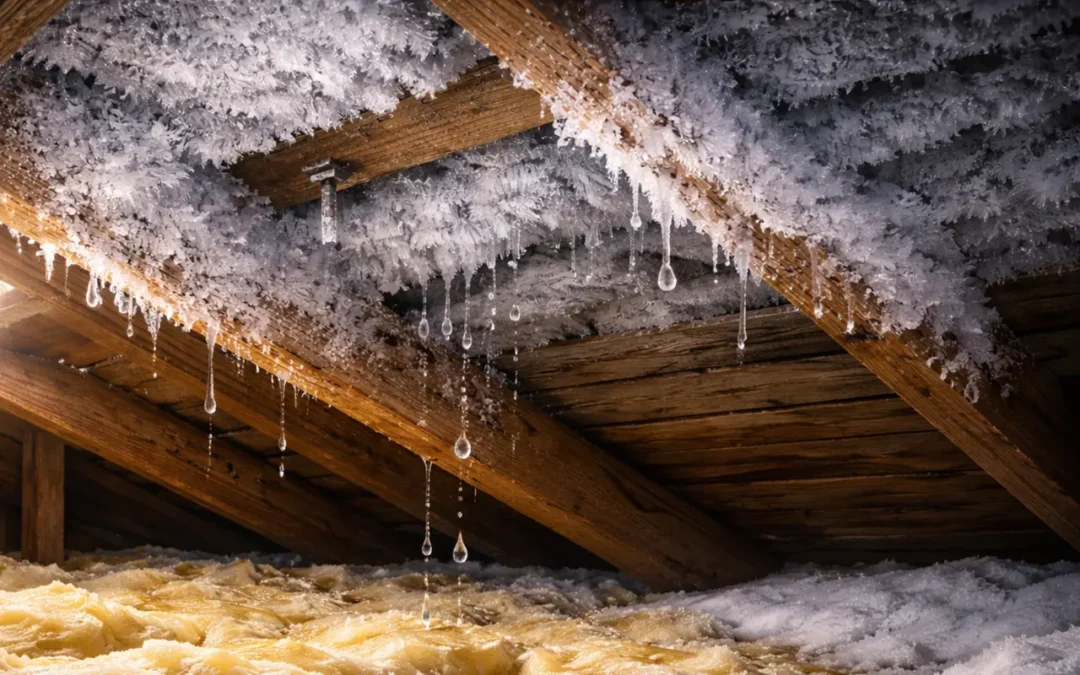
Attic frost forms during extended cold periods when warm, moist indoor air escapes into a freezing attic. When that moisture contacts cold surfaces like roof decking, nails, or trusses, it freezes on contact, creating white frost buildup.
Attic rain happens when warmer daytime temperatures or Chinooks cause that frost to melt. The moisture then drips back down onto insulation and ceilings.
This is when homeowners begin noticing:
- Water stains or discolouration on ceilings
- Wet or compressed attic insulation
- Musty odours or visible mold growth
In Calgary homes, attic frost is the cause – attic rain is the result.
Why Attic Frost Becomes a Problem
-
Temperature swings cause repeated freeze–thaw cycles
-
Melted frost saturates insulation instead of evaporating
-
Moisture has more time to spread before spring drying occurs
Even small air leaks around attic hatches, bathroom fans, pot lights, or plumbing stacks can allow warm, humid air to escape upward all winter long. By February, that moisture has often accumulated enough to cause visible damage.
Indoor Humidity: The Silent Contributor
Excess indoor humidity is one of the biggest drivers of attic frost and attic rain.
During cold weather:
- Indoor humidity should generally be maintained around 30–35% when outdoor temperatures are approximately –10°C
- During colder periods (–20°C or below), indoor humidity levels may need to be reduced further to help minimize condensation risk
Common winter moisture sources include:
- Showers and baths without proper exhaust
- Cooking steam
- Humidifiers set too high
- Bathroom fans venting into the attic instead of outside
When humid air escapes into a poorly sealed attic, condensation and frost buildup are almost inevitable.
How Insulation and Airflow Fix the Root Cause
Attic frost isn’t just a ventilation issue – it’s a system problem involving insulation, air sealing, and airflow working together.
Proper attic insulation helps by:
- Keeping heat inside the home instead of warming the attic
- Reducing temperature differences that cause condensation
- Maintaining recommended R-Value insulation levels for Calgary homes
Balanced attic ventilation helps by:
- Removing excess moisture from the attic space
- Allowing cold, dry air to enter through soffits
- Letting warm, moist air exit through roof or ridge vents
Air sealing is the missing link
Even the best insulation won’t perform properly if warm air is leaking into the attic. Sealing around attic hatches, bathroom fans, light fixtures, and duct penetrations is critical to stopping moisture at the source.
Why Attic Frost Should Never Be Ignored
If left untreated, attic frost can lead to:
- Wet, damaged insulation that loses R-value
- Mold growth in attic and ceiling cavities
- Roof deck deterioration
- Ceiling stains and drywall damage during late-winter thaws
February is often when these problems become visible – but by then, damage may already be underway.
Get Your Attic Checked Before Spring Thaws Make Things Worse
If you suspect attic frost – or want peace of mind before spring melt – a professional attic inspection can identify the problem and correct it before moisture damage spreads.
Call us at (403) 472-2676 or request a quote online at sorell.ca/contact-us/.
Looking for more tips on optimizing your home’s insulation, energy-saving hacks, or updates on our latest services? Follow us on social media for expert advice, and behind-the-scenes insights.
Add your first comment to this post